HURBANA + The Roadrunners. BOLD&Flow 2026
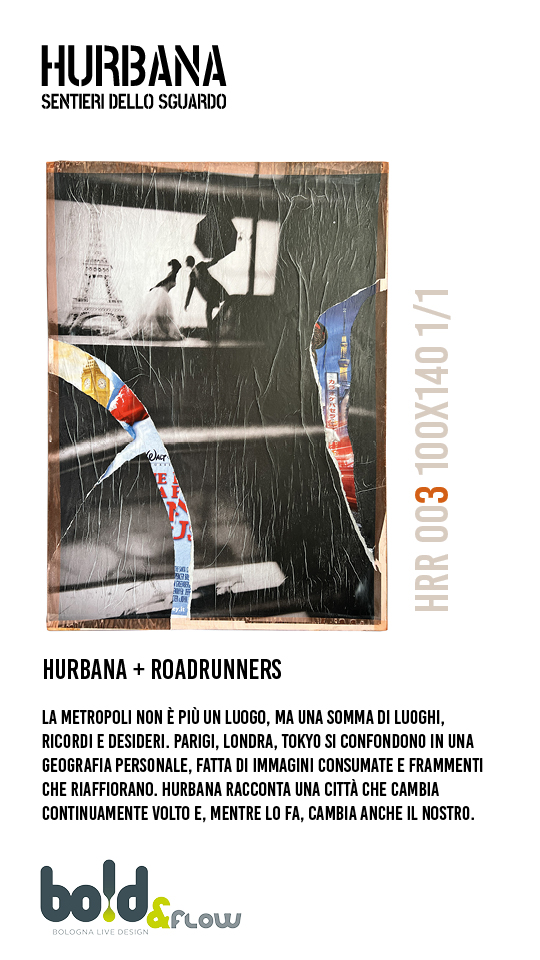
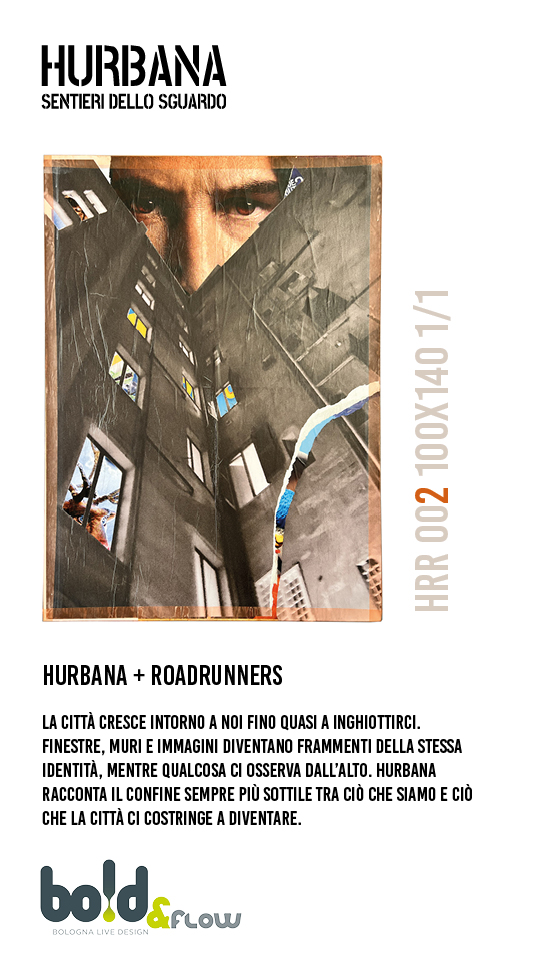
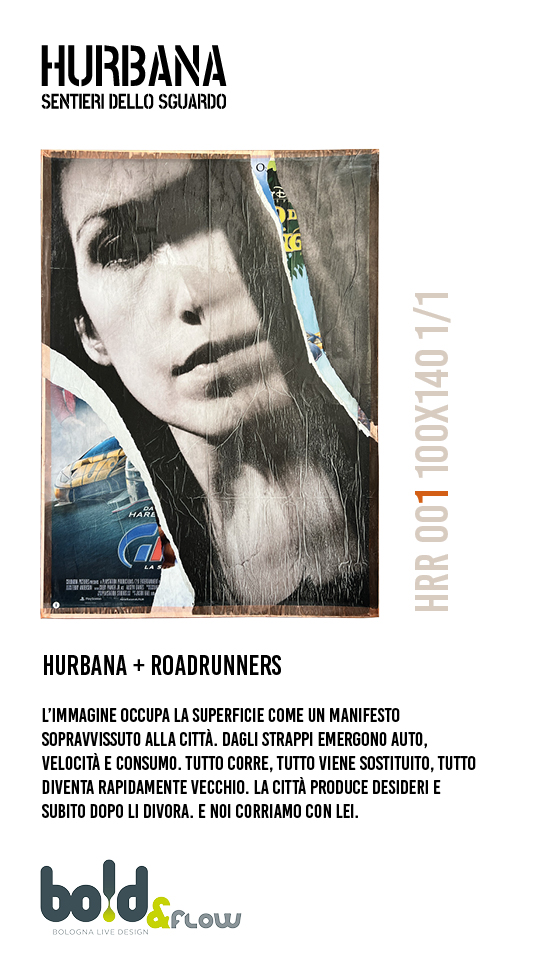
Ci sono fotografie, vecchi manifesti cinematografici, carte strappate, volti, scritte, tracce di colla e superfici che sembrano avere già vissuto altrove. Ci sono soprattutto molte mani. HURBANA + The Roadrunners nasce così, senza una sequenza perfettamente ricostruibile e, forse, senza nemmeno la necessità di averne una.
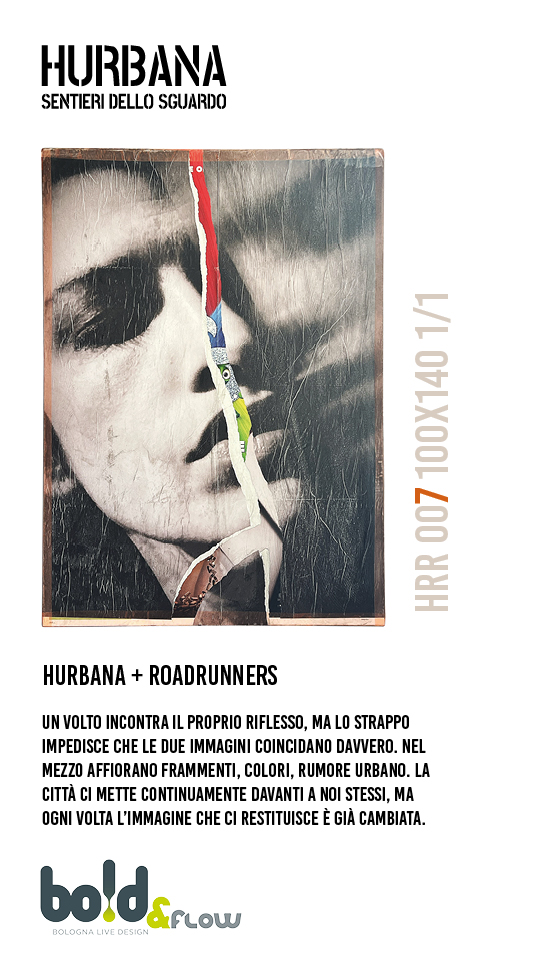
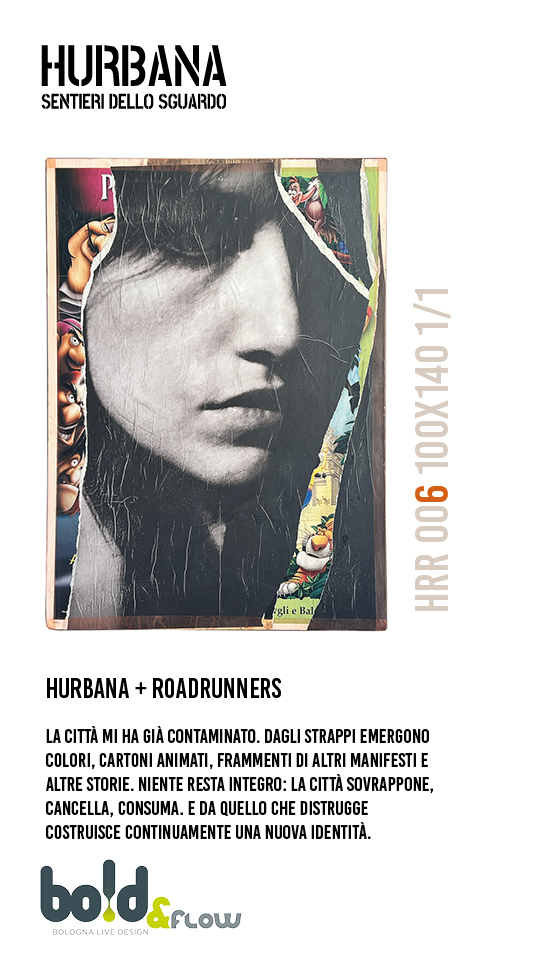
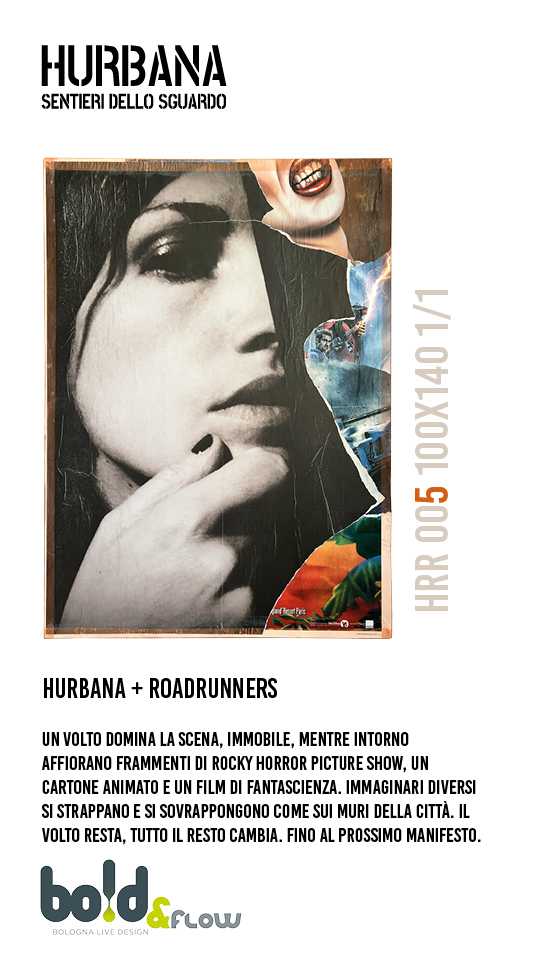
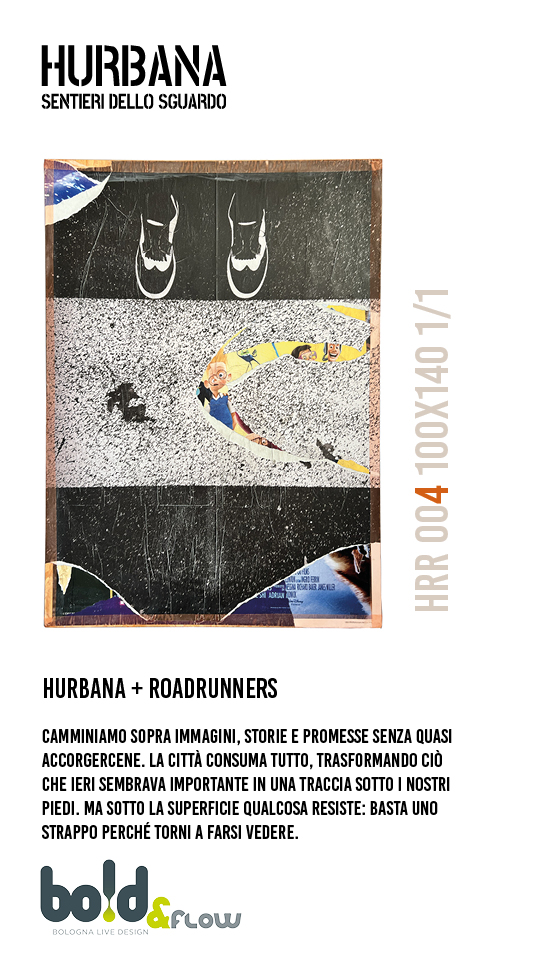
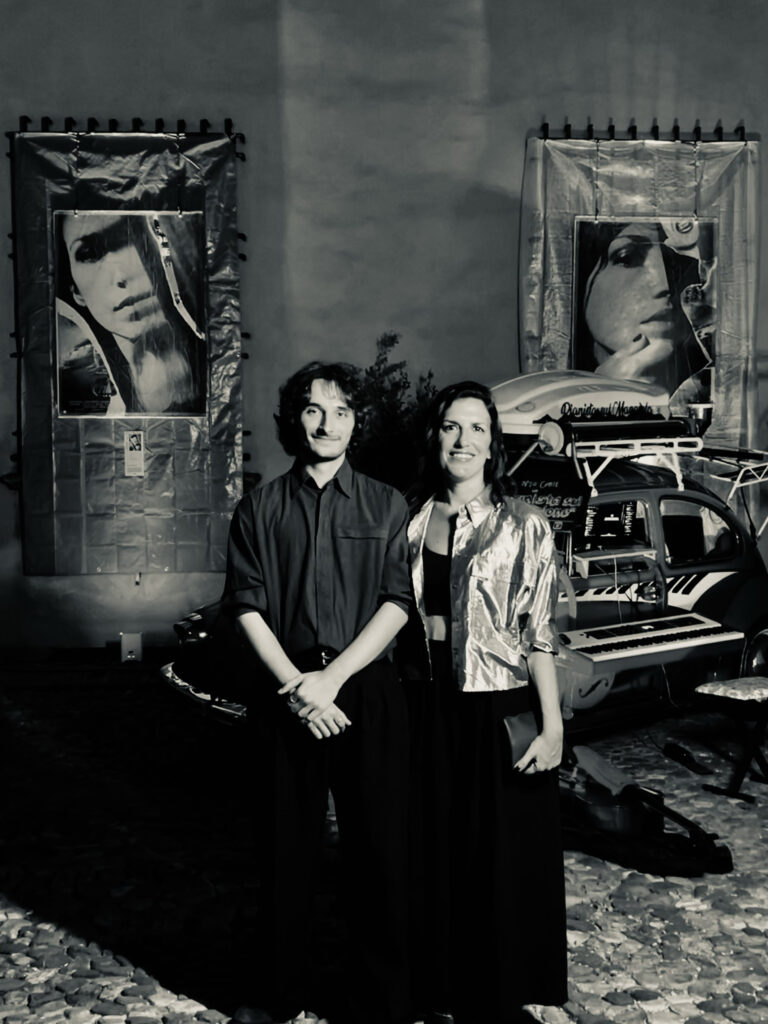
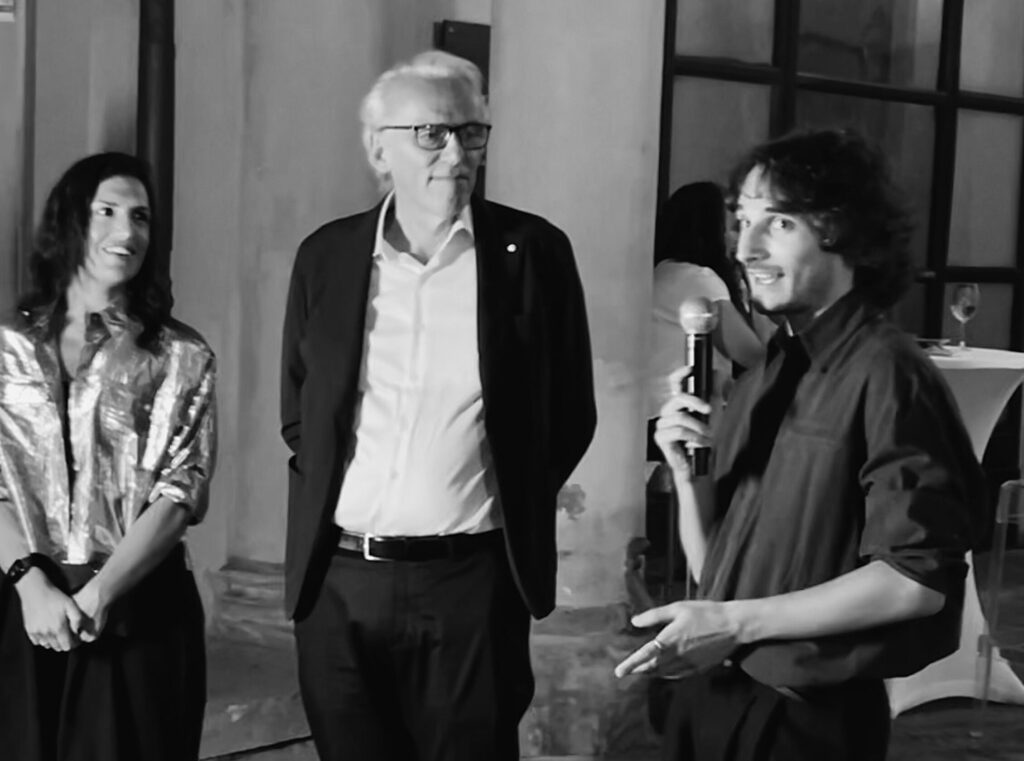
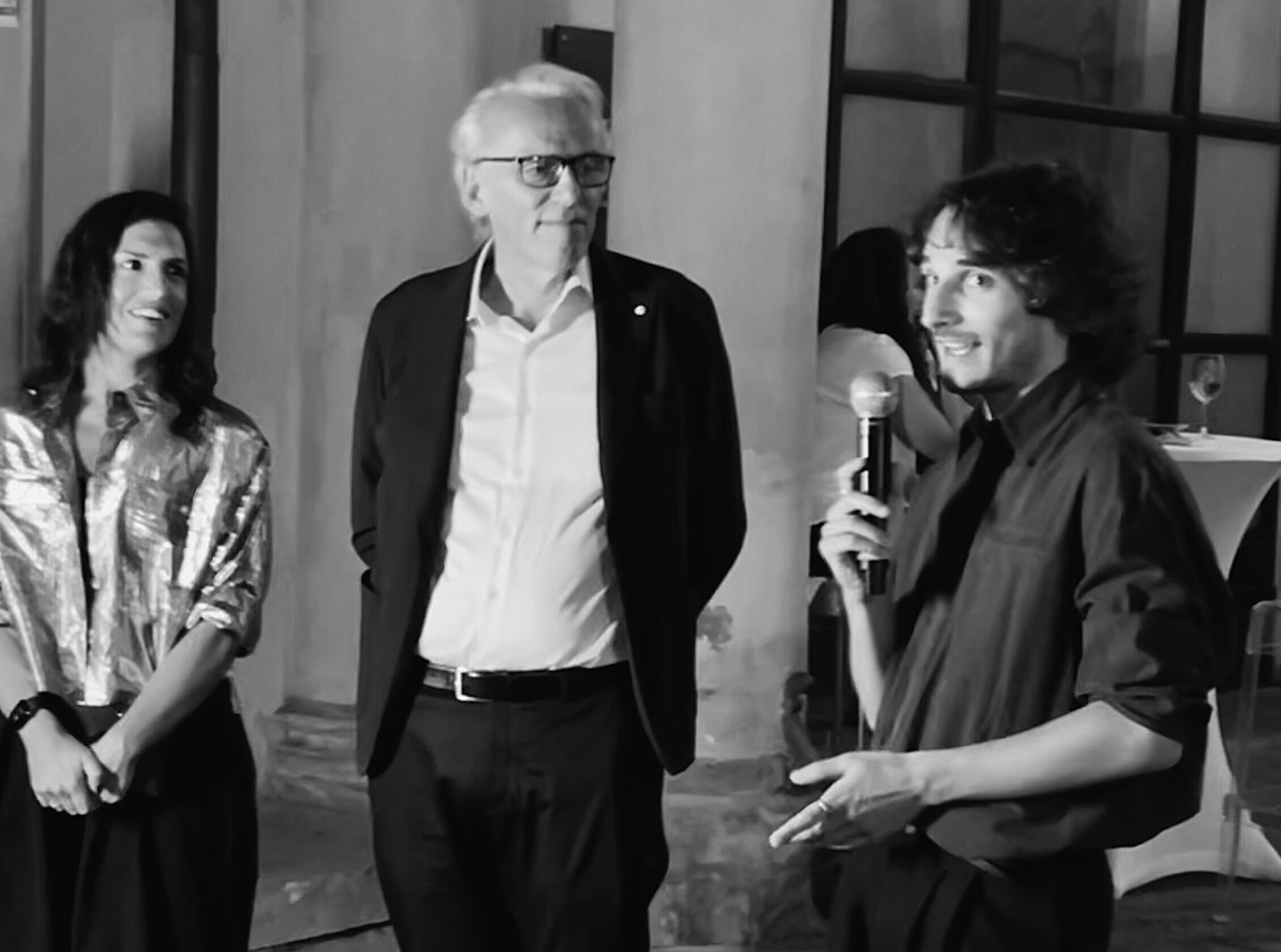
Il progetto è stato presentato a Bologna con un incontro che ha visto Massimo Iosa Ghini conversare con Sara Allegrini e Michelangelo Piroli, portavoce dei Roadrunners. Più che spiegare le opere, la conversazione ha permesso di entrare nel modo in cui sono nate, facendo emergere una pratica nella quale fotografia, grafica, cinema, materia e intervento manuale finiscono continuamente per contaminarsi. Il punto di partenza sono i volti. Volti fotografati, osservati, isolati. Presenze umane che successivamente incontrano un altro archivio di immagini, quello dei manifesti cinematografici originali, cercati e recuperati come materia fisica prima ancora che iconografica.
Da quel momento la genealogia delle opere diventa più difficile da seguire. Qualcuno fotografa, qualcuno cerca i manifesti, qualcuno sceglie un frammento e lo strappa, un altro lo colloca. Un lavoro iniziato da una persona viene ripreso da un’altra, modificato da una terza, magari lasciato per qualche tempo e poi nuovamente attraversato da un gesto. Non esiste necessariamente un autore per ogni passaggio e soprattutto non esiste un progetto iniziale capace di prevedere con esattezza il risultato finale.
HUMAN + HURBAN
È in questa sovrapposizione che prende forma HURBANA. Human + Hurban. L’umano dentro una dimensione urbana che non funziona come semplice scenario, ma come parte stessa dell’opera. I volti, i manifesti e i trattamenti delle superfici appartengono tutti allo stesso spirito urbano. La città non viene rappresentata, entra nel processo attraverso la stratificazione, l’appropriazione, l’errore, il deterioramento e la casualità.
Un muro urbano non possiede mai veramente una versione definitiva. Un manifesto viene affisso e, da quel momento, smette in parte di appartenere a chi lo ha realizzato. Può piovere, il sole può scolorirlo, qualcuno può strapparne un pezzo, un altro può incollarci sopra qualcosa. Può passare una persona con una bomboletta e lasciare un segno che nessuno aveva previsto. Dopo qualche settimana ciò che rimane è il risultato di una quantità di decisioni, incidenti e interferenze senza regia. Le opere di HURBANA + The Roadrunners sembrano accettare la stessa possibilità. Non cercano di imitare il muro della città. Ne assumono il comportamento.
La carta porta la propria storia, i manifesti cinematografici quella di un immaginario collettivo, i volti introducono una presenza contemporanea. Gli strappi interrompono le immagini, le sovrapposizioni ne producono altre e ogni intervento modifica quello precedente senza necessariamente cancellarlo.
Chi ha fatto cosa?
È una domanda apparentemente semplice che davanti a questi lavori perde progressivamente importanza. Il collettivo funziona proprio attraverso una parziale dispersione dell’autorialità. Persone differenti intervengono in momenti differenti e con competenze differenti: fotografia, ricerca, selezione, composizione, materia, testo. Capita che chi inizia un lavoro non sia chi lo conclude e che qualcuno intervenga su una soluzione che sembrava già conclusa, spostandone completamente il significato. Può accadere così che, alla fine, nessuno sappia ricostruire perfettamente perché una determinata opera sia diventata esattamente così.
Non è una rinuncia al progetto. È piuttosto l’accettazione di una variabile che appartiene profondamente alla cultura urbana: la perdita del controllo assoluto sull’immagine.
Forse non sono ancora finite
Anche le parole che compaiono nei lavori seguono una logica simile. Non sono titoli messi lì per spiegare ciò che bisogna vedere e nemmeno slogan nel senso tradizionale del termine. Sono piuttosto constatazioni poetiche degli avvenimenti, frasi arrivate alla fine, quando qualcosa era già successo. Parole che osservano l’immagine invece di anticiparla.
In fondo la strada funziona nello stesso modo. Accoglie immagini, persone, messaggi e intenzioni, poi li espone al tempo e agli altri. Nessuno può sapere esattamente quale sarà il risultato. È probabilmente qui che HURBANA + The Roadrunners trova la propria dimensione più interessante, nell’idea che l’opera possa non coincidere con il momento in cui l’artista decide di averla terminata.
Perché forse queste opere non sono nemmeno del tutto finite. Potrebbero esserlo oggi e non esserlo più domani. Potrebbe comparire un altro segno, uno strappo, una parola. Potrebbe intervenire un’altra mano. Come accade alle cose quando vengono lasciate in strada.
HURBANA + The Roadrunners. The Endless Work
There are photographs, old movie posters, torn paper, faces, words, traces of glue and surfaces that seem to have already lived somewhere else. Above all, there are many hands. HURBANA + The Roadrunners begins this way, without a sequence that can be perfectly reconstructed and, perhaps, without any need for one.
The project was presented in Bologna with a conversation between Massimo Iosa Ghini, Sara Allegrini and Michelangelo Piroli, spokesperson for The Roadrunners. Rather than explaining the works, their conversation offered a way into how they came into being, revealing a practice in which photography, graphic design, cinema, materials and manual intervention continually contaminate one another. The starting point is the faces. Faces photographed, observed, isolated. Human presences that later encounter another archive of images: original movie posters, sought out and recovered as physical material even before being considered for their iconography.
From that moment on, the genealogy of the works becomes harder to trace. Someone takes the photographs, someone searches for the posters, someone selects and tears away a fragment, someone else places it. A work begun by one person is picked up by another, altered by a third, perhaps left untouched for a while before another gesture changes it once again. There is not necessarily a single author behind each stage and, above all, there is no initial plan capable of predicting exactly what the final result will be.
HUMAN + HURBAN
It is through this layering that HURBANA takes shape. Human + Hurban. The human within an urban dimension that does not function simply as a setting, but as an integral part of the work itself. Faces, posters and surface treatments all belong to the same urban spirit. The city is not represented; it enters the process through layering, appropriation, error, deterioration and chance.
An urban wall never really has a definitive version. A poster is pasted onto it and, from that moment, partly ceases to belong to the person who made it. It may rain. The sun may bleach it. Someone may tear away a piece, while someone else may paste something over it. A passer-by with a spray can may leave a mark that nobody had anticipated. After a few weeks, what remains is the result of countless decisions, accidents and interventions without a director. The works of HURBANA + The Roadrunners seem to embrace the same possibility. They do not try to imitate the walls of the city. They adopt their behaviour.
The paper carries its own history, the movie posters carry the memory of a collective imagination, while the faces introduce a contemporary human presence. Tears interrupt the images, layers generate new ones, and every intervention alters what came before without necessarily erasing it.
Who Did What?
It is an apparently simple question that gradually loses its importance when confronted with these works. The collective operates precisely through a partial dispersal of authorship. Different people intervene at different moments and with different skills: photography, research, selection, composition, materials, text. The person who begins a work may not be the one who finishes it, and someone may intervene on something that already seemed complete, shifting its meaning entirely. In the end, it may even be impossible to reconstruct precisely why a particular work became exactly what it is.
This is not an abandonment of the project. It is instead the acceptance of a variable deeply rooted in urban culture: the loss of absolute control over the image.
Perhaps They Are Not Finished Yet
The words that appear in the works follow a similar logic. They are not titles placed there to explain what we are supposed to see, nor are they slogans in the traditional sense. They are closer to poetic observations of what has happened, phrases that arrive at the end, when something has already taken place. Words that observe the image rather than anticipate it.
After all, the street works in much the same way. It receives images, people, messages and intentions, then exposes them to time and to others. No one can know exactly what the result will be. Perhaps this is where HURBANA + The Roadrunners finds its most compelling dimension: in the idea that a work does not necessarily end at the moment when the artist decides it is finished.
Because perhaps these works are not entirely finished at all. They may be finished today and no longer be so tomorrow. Another mark might appear, another tear, another word. Another hand might intervene. Just as happens to things when they are left out on the street.
HURBANA — Sentieri dello sguardo
Mostra di Sara Allegrini + The Roadrunners
21–27 settembre 2026
14:30–23:30
Domenica 27 settembre: 14:30–20:00
Palazzo Isolani
Bologna
Nell’ambito di BOLD&Flow 2026 — Bologna Live Design