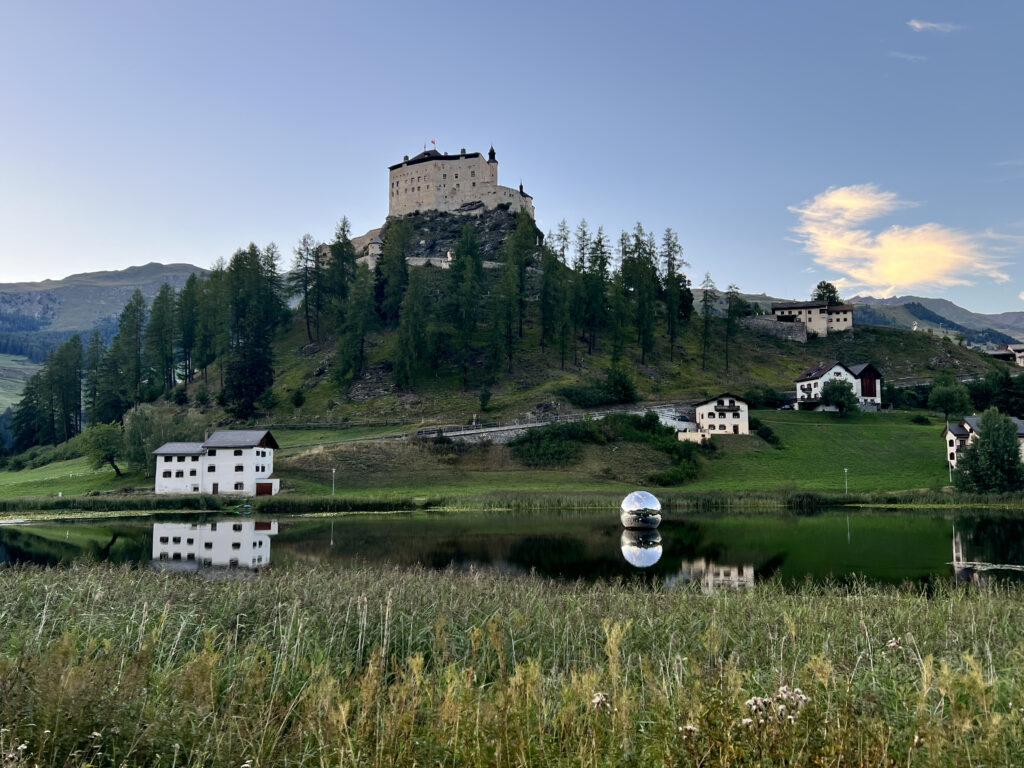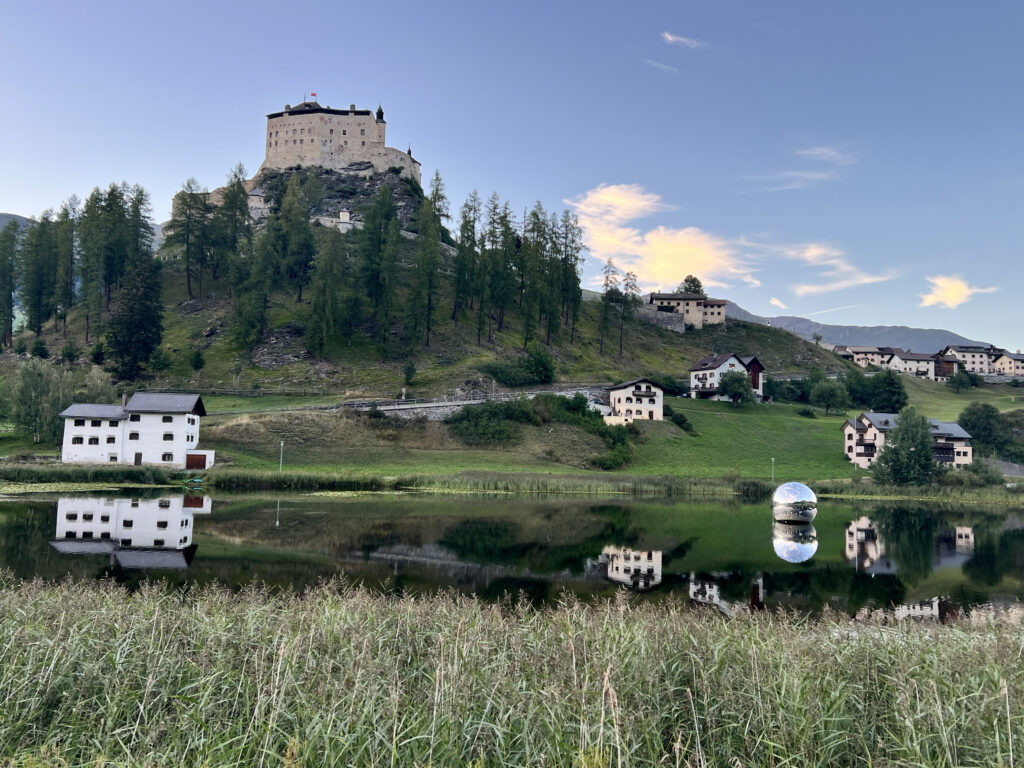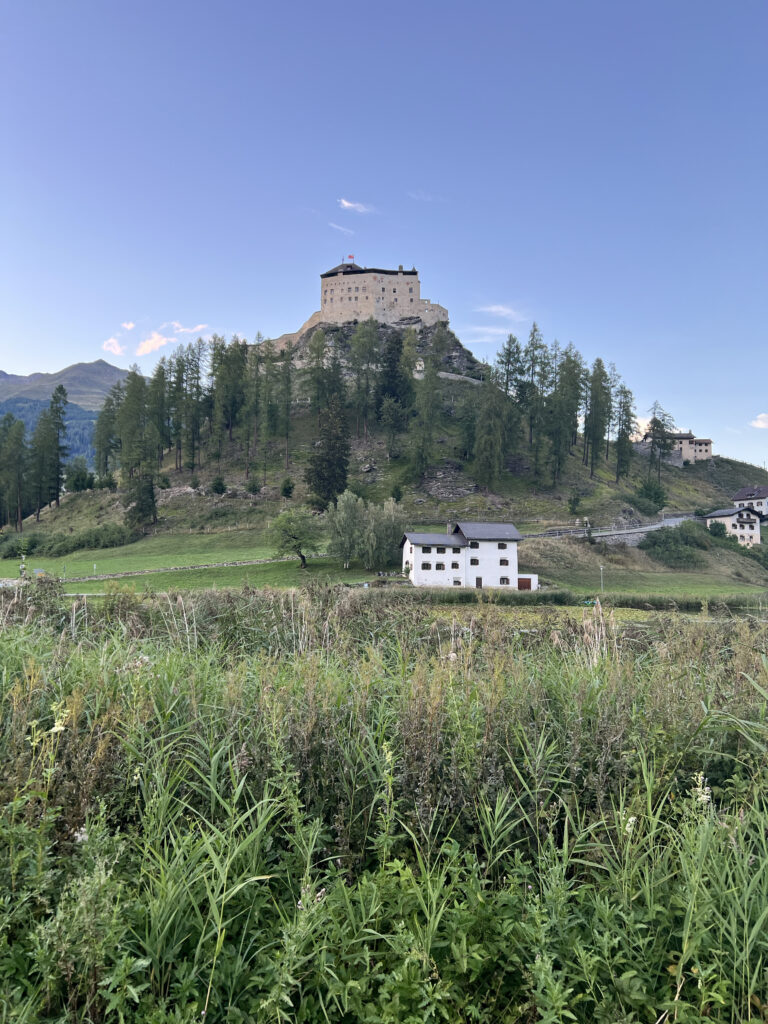

Arrivare al castello di Tarasp significa vederlo molto prima di raggiungerlo. Sta lassù, apparentemente fuori scala, piantato sulla montagna come se qualcuno avesse deciso di aggiungere un elemento al paesaggio. Non è ancora arte, forse. Ma è già una dichiarazione. Not Vital ha acquistato Schloss Tarasp nel 2016 e ne ha fatto qualcosa che è difficile definire museo, casa, fondazione o opera. Probabilmente è tutte queste cose insieme. Un castello quasi millenario che continua a essere castello ma nel quale il tempo ha smesso di procedere ordinatamente. Cammini attraverso secoli di storia e improvvisamente incontri Basquiat. Poco dopo Warhol. Poi Not Vital. L’antico e il contemporaneo non sembrano avere alcuna intenzione di spiegarsi reciprocamente. Stanno lì. E proprio per questo funzionano.
L’arte perde le pareti
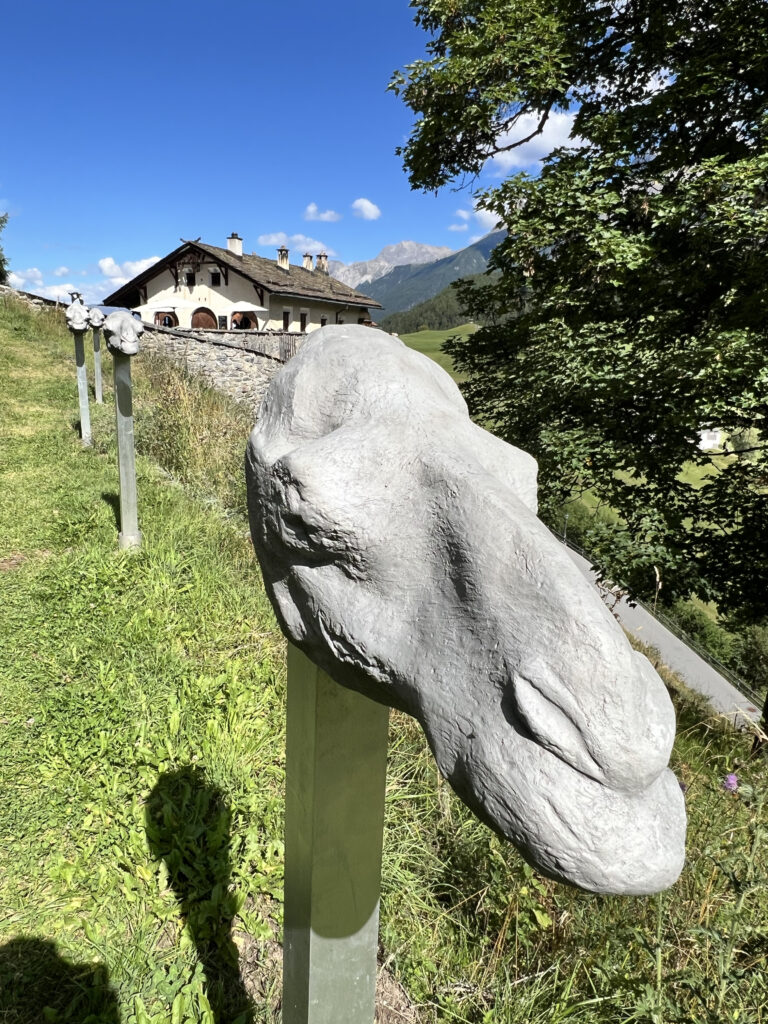
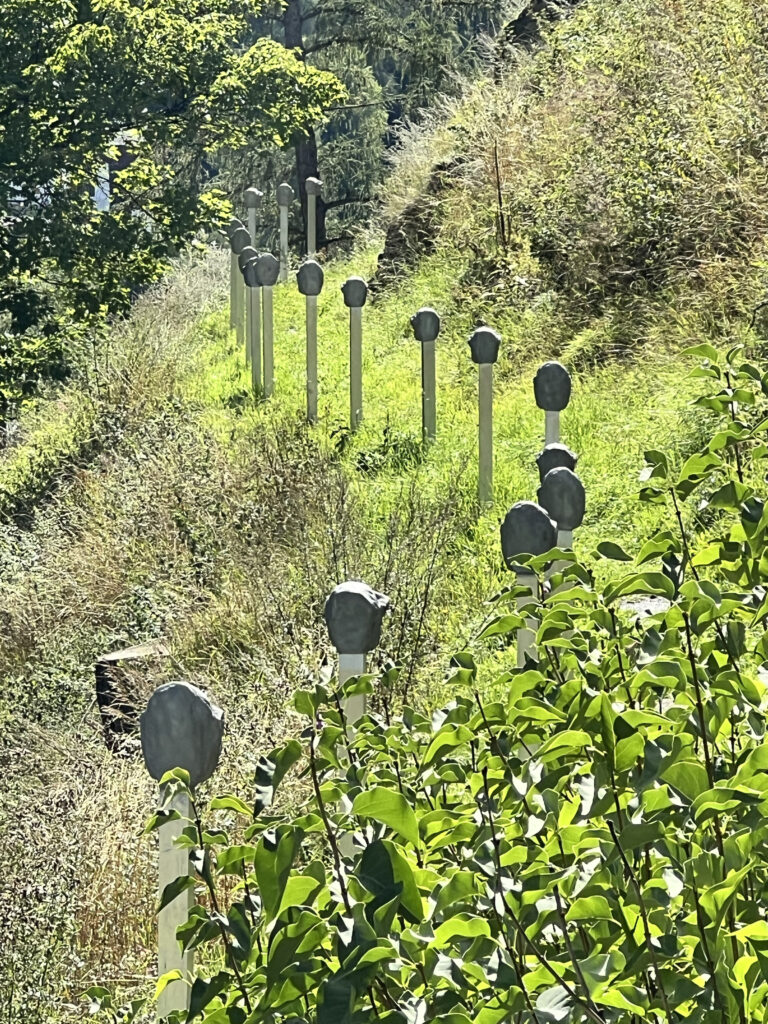
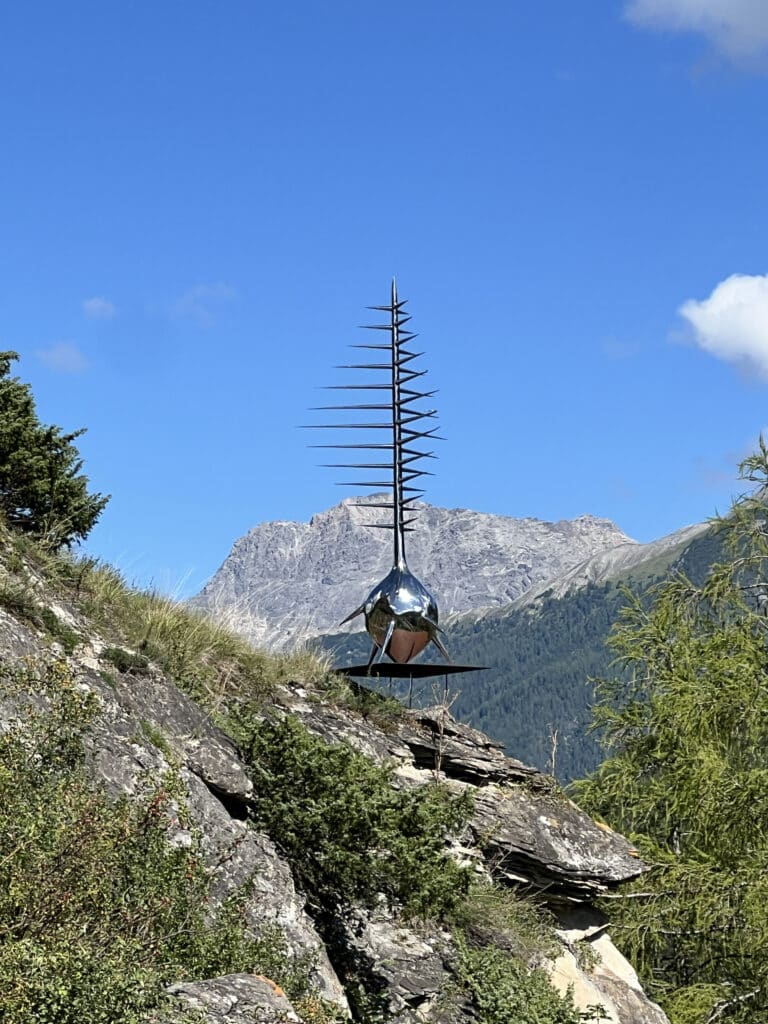
Fuori succede qualcosa di ancora più interessante. L’arte perde definitivamente le pareti. Lungo il sentiero compaiono teste di giraffa come segnali. Non indicano soltanto una direzione, sembrano osservarti mentre passi. Il paesaggio dell’Engadina, già abbastanza potente da non aver bisogno di alcun intervento, viene disseminato di presenze apparentemente incongrue. Eppure dopo qualche minuto smettono di sembrarlo. È forse questo uno degli aspetti più affascinanti del lavoro di Not Vital. Non sembra voler mettere un’opera davanti alla natura. Cerca piuttosto il punto esatto nel quale l’opera possa entrare nel paesaggio e modificare, anche solo per un istante, la nostra percezione.
Una luna nel lago
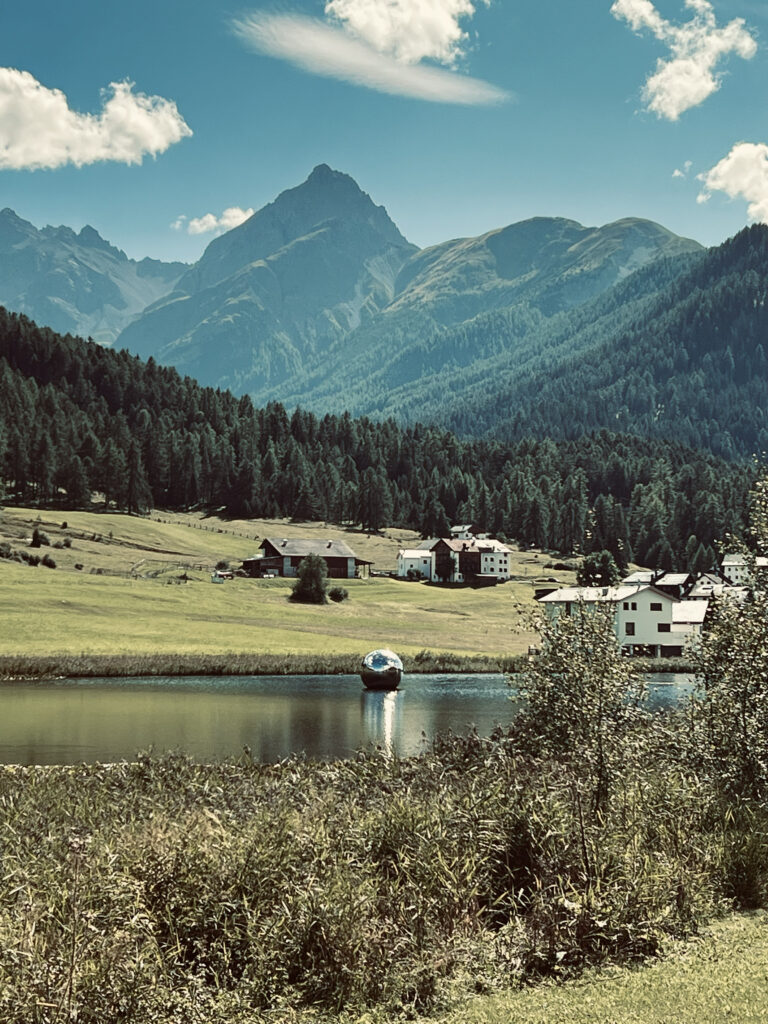
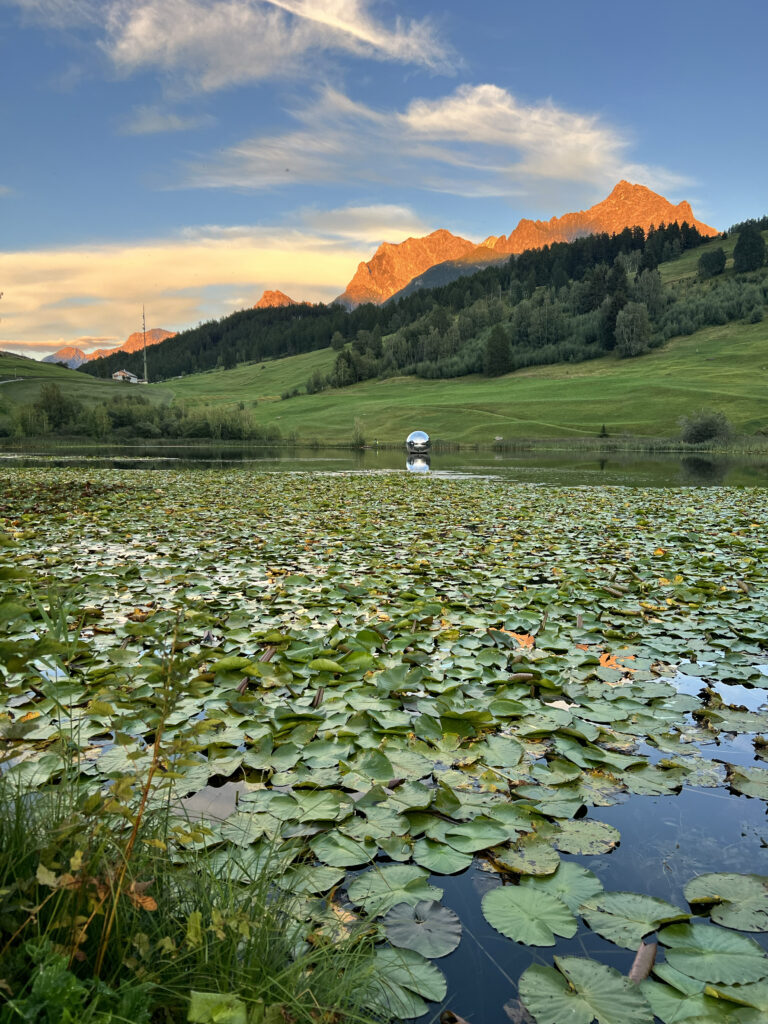
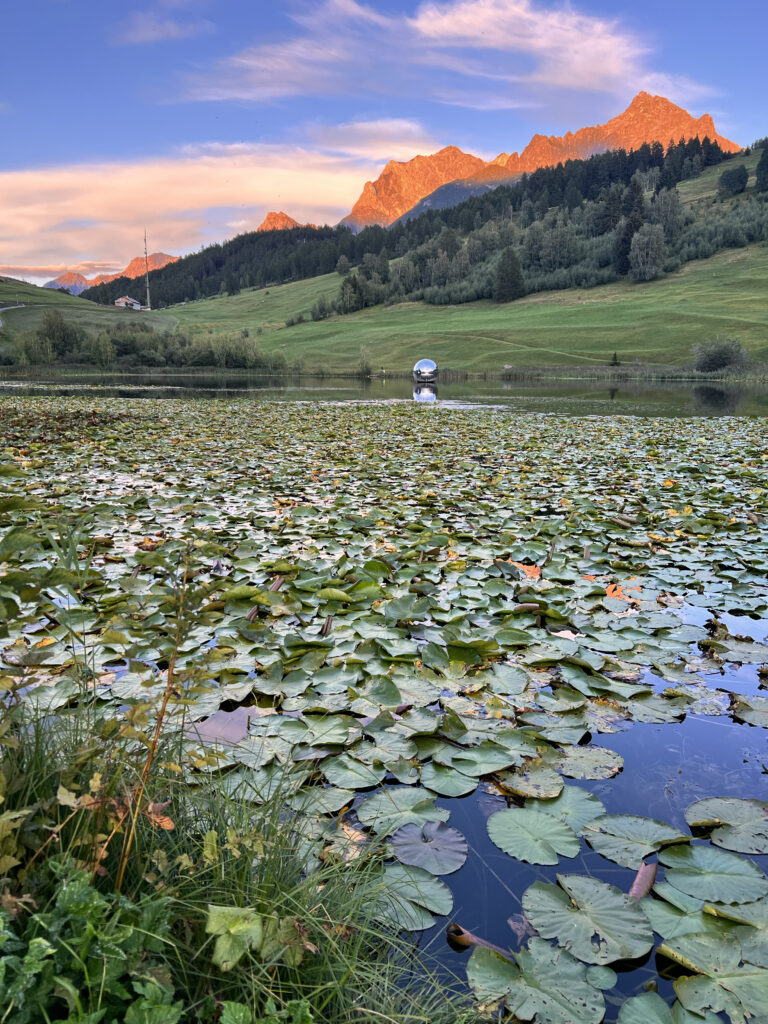
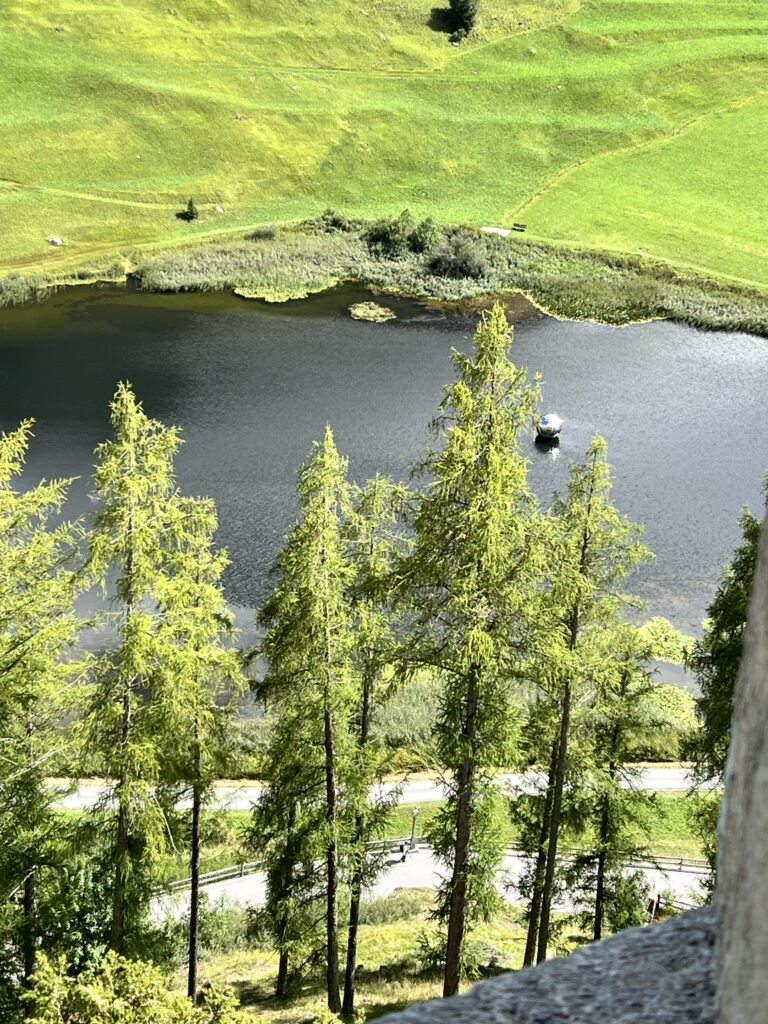
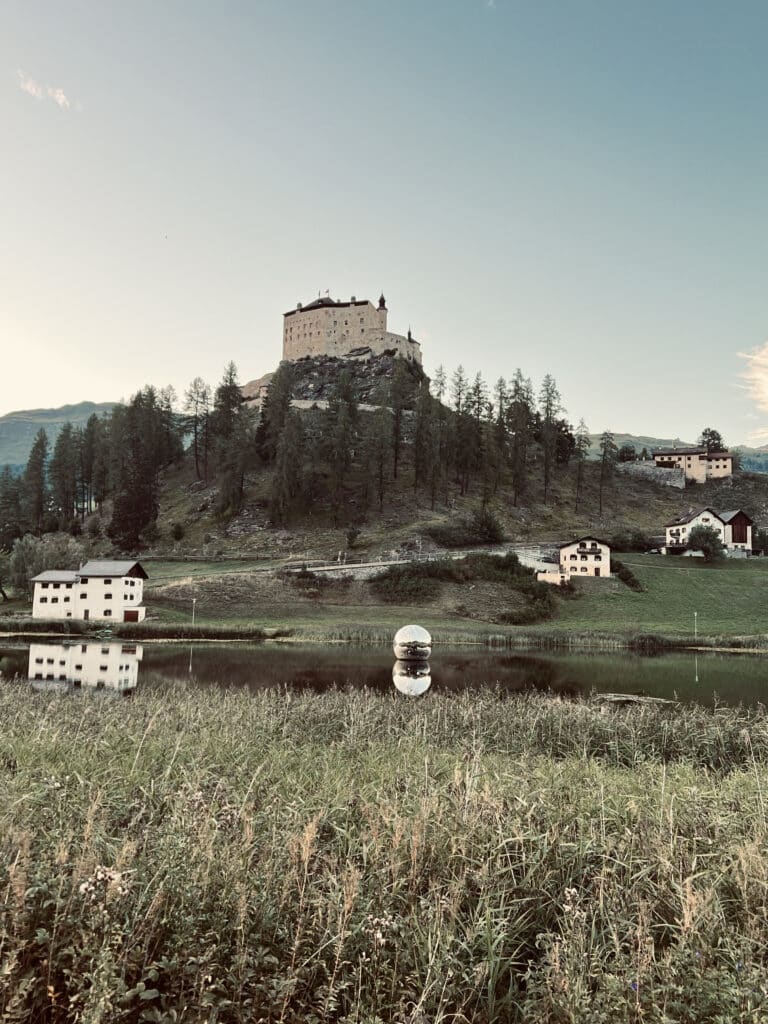
Poi arrivi al lago. Dentro c’è una luna. Una forma perfetta, impossibile e allo stesso tempo assolutamente naturale. Ti avvicini per guardarla e inevitabilmente accade qualcosa. Dentro quella luna finisci per vedere anche te stesso. Ed è lì che, almeno per me, il lavoro si chiude. Perché forse l’arte, in fondo, siamo noi che ci guardiamo mentre guardiamo il creato. Abbiamo costruito immagini per migliaia di anni cercando di capire quello che avevamo davanti. Abbiamo dipinto animali sulle pareti delle grotte, inventato divinità, costruito templi, scolpito corpi, fotografato volti, alzato edifici e disseminato montagne di oggetti apparentemente inutili. Non necessariamente per cambiare il mondo, ma per riuscire a vederlo. E forse anche per riuscire a vedere noi stessi dentro di lui.
Gli dei spostano le nuvole
C’è un pensiero che mi è tornato in mente camminando a Tarasp, legato all’Odissea di Christopher Nolan. Gli dei sono quelli che spostano le nuvole, accendono il fuoco, fanno cadere la pioggia. Mi piace pensare che l’arte nasca esattamente nello spazio che separa quelle due possibilità. Possiamo credere che sia stato un dio a spostare una nuvola oppure sapere perfettamente perché quella nuvola si è spostata. Ma possiamo ancora alzare gli occhi e guardarla. Not Vital sembra lavorare lì. Prende una montagna, un castello, un sentiero, un animale, la superficie dell’acqua, il cielo. Non cerca di superarli. Introduce qualcosa che ci costringe semplicemente a guardarli di nuovo. Una giraffa ci indica la strada. Una luna ci restituisce la nostra immagine. E per qualche secondo siamo contemporaneamente spettatori e opera. Forse l’arte non serve a spiegare il creato. Serve a ricordarci di guardarlo.
Testo di Gianluca Piroli
Not Vital. The Gods Move the Clouds
Arriving at Tarasp Castle means seeing it long before you reach it. It stands up there, seemingly out of scale, planted on the mountain as if someone had decided to add another element to the landscape. Perhaps it is not art yet. But it is already a statement. Not Vital acquired Schloss Tarasp in 2016 and turned it into something difficult to define as a museum, a home, a foundation or an artwork. It is probably all of these things at once. A nearly thousand-year-old castle that remains a castle, but where time seems to have stopped moving in an orderly fashion. You walk through centuries of history and suddenly encounter Basquiat. A little further on, Warhol. Then Not Vital. The ancient and the contemporary make no attempt to explain one another. They simply coexist. And that is precisely why it works.
Art Loses Its Walls
Outside, something even more interesting happens. Art loses its walls altogether. Along the path, giraffe heads appear like signposts. They do not simply point the way, they seem to watch you as you pass. The Engadin landscape, already powerful enough to need no intervention whatsoever, becomes scattered with seemingly incongruous presences. And yet, after a few minutes, they no longer seem incongruous at all. Perhaps this is one of the most fascinating aspects of Not Vital’s work. He does not seem interested in placing an artwork in front of nature. Instead, he searches for the precise point at which the work can enter the landscape and alter, even for just a moment, the way we perceive it.
A Moon in the Lake
Then you reach the lake. There is a moon inside it. A perfect form, impossible and at the same time completely natural. You move closer to look at it and, inevitably, something happens. Inside that moon, you end up seeing yourself. And that is where, at least for me, the work becomes complete. Because perhaps art, ultimately, is us looking at ourselves while we look at creation. For thousands of years we have made images in an attempt to understand what stood before us. We painted animals on cave walls, invented gods, built temples, sculpted bodies, photographed faces, raised buildings and scattered mountains with apparently useless objects. Not necessarily to change the world, but to find a way of seeing it. And perhaps to find a way of seeing ourselves within it.
The Gods Move the Clouds
There is a thought that came back to me while walking through Tarasp, connected to Christopher Nolan’s The Odyssey. The gods are those who move the clouds, light the fire, make the rain fall. I like to think that art is born precisely in the space between those two possibilities. We can believe that a god moved a cloud, or we can know perfectly well why that cloud moved. But we can still raise our eyes and look at it. Not Vital seems to work in that space. He takes a mountain, a castle, a path, an animal, the surface of the water, the sky. He does not try to surpass them. He introduces something that simply forces us to look at them again. A giraffe shows us the way. A moon gives us back our reflection. And for a few seconds we are both spectator and artwork. Perhaps art is not meant to explain creation. It is meant to remind us to look at it.
Text by Gianluca Piroli