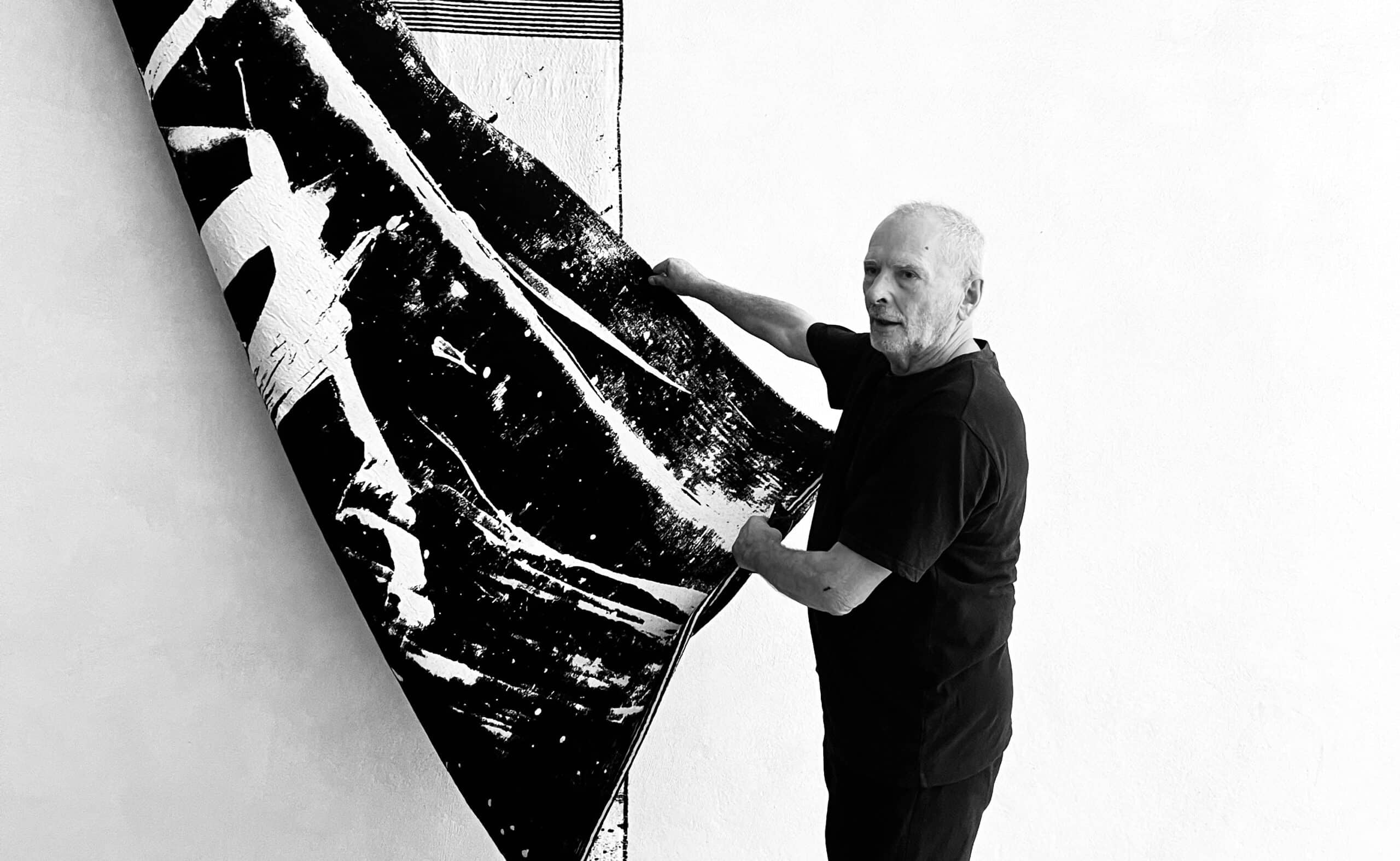
La trama e l’ordito di Fabio Iemmi
Ci sono immagini che appartengono alla storia e immagini che sembrano appartenere a un tempo precedente alla storia. Non perché siano più antiche, ma perché continuano a custodire qualcosa che non sappiamo più nominare.
Le tele di Fabio Iemmi sembrano provenire da questo territorio.
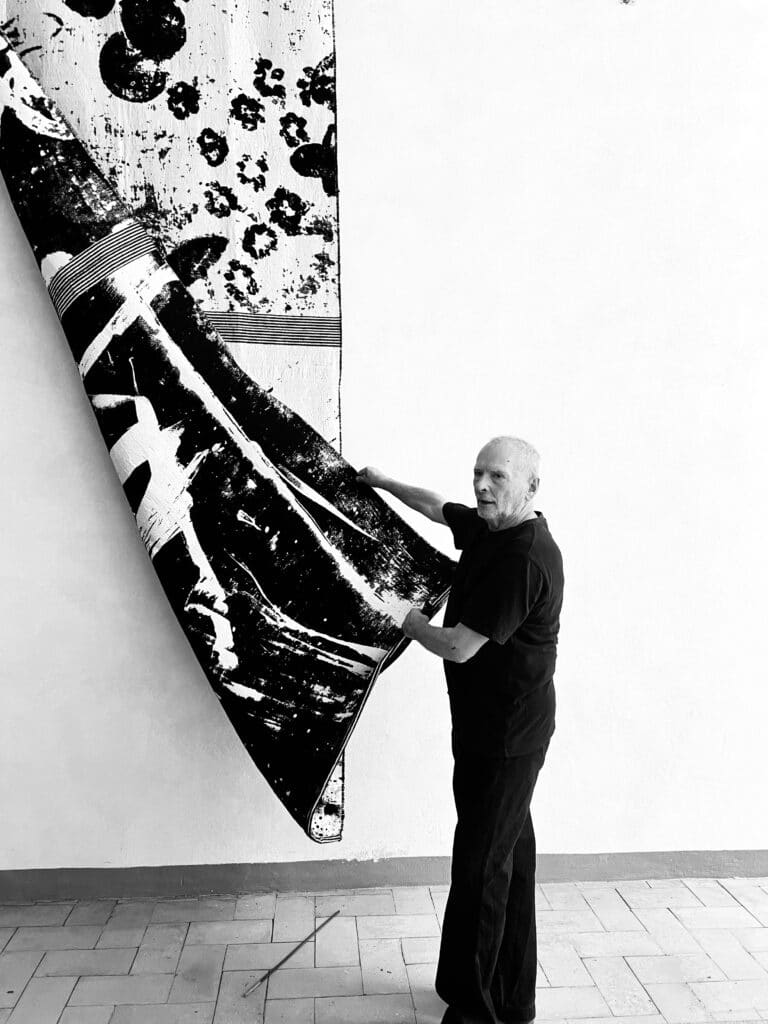
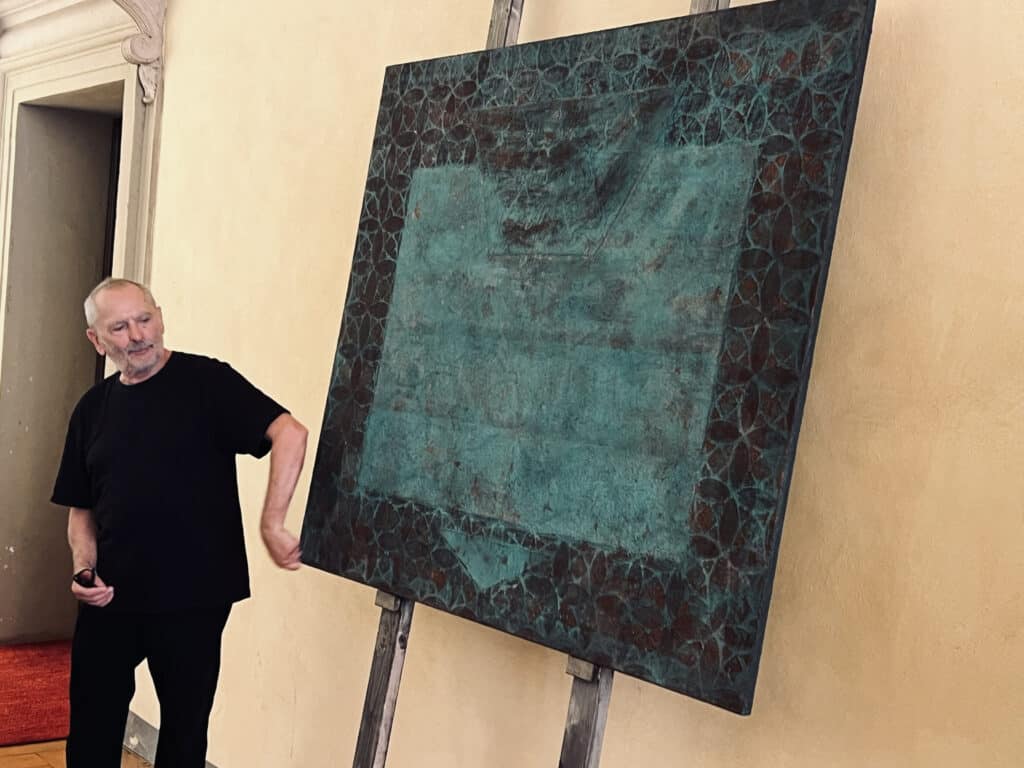
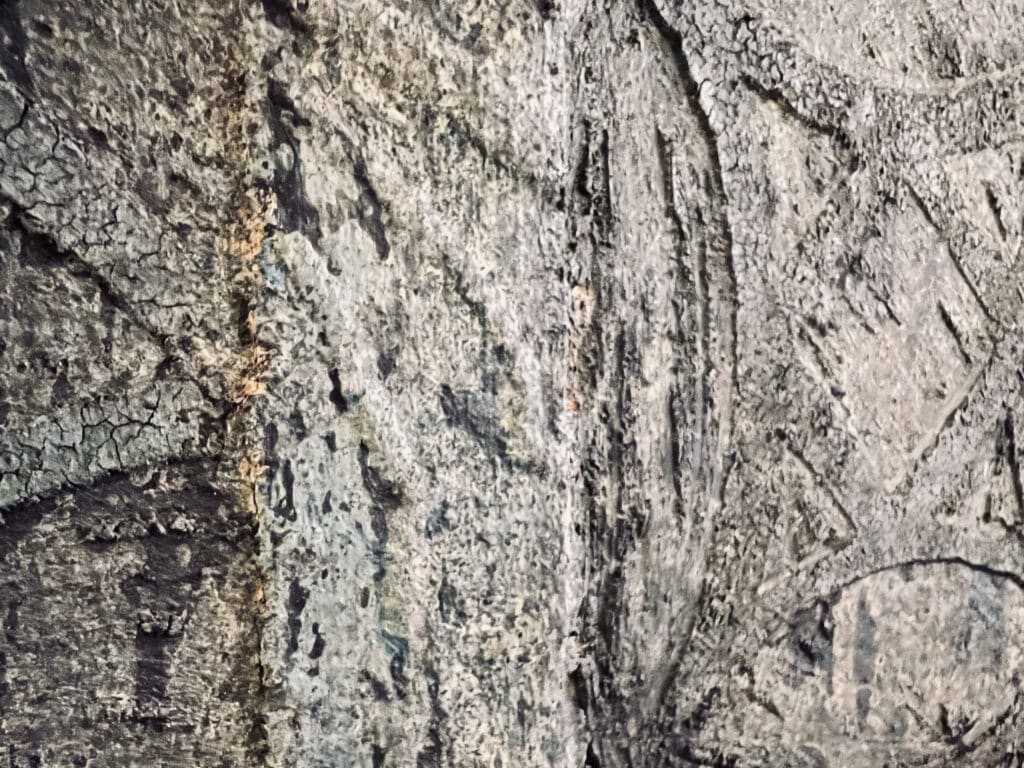
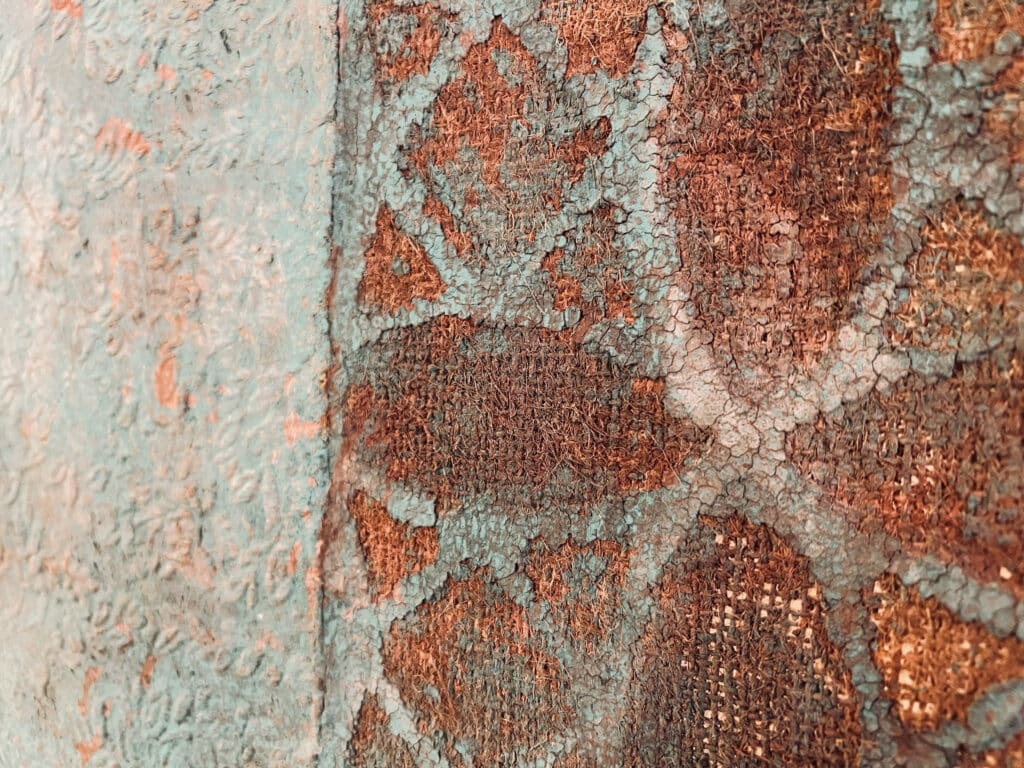
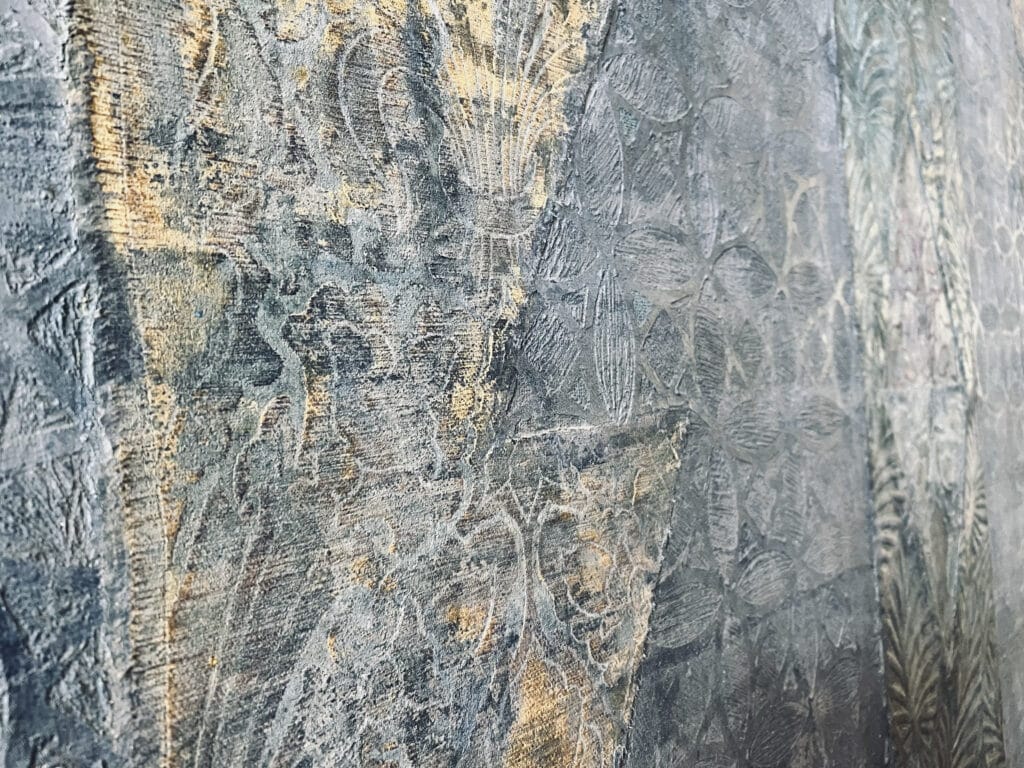
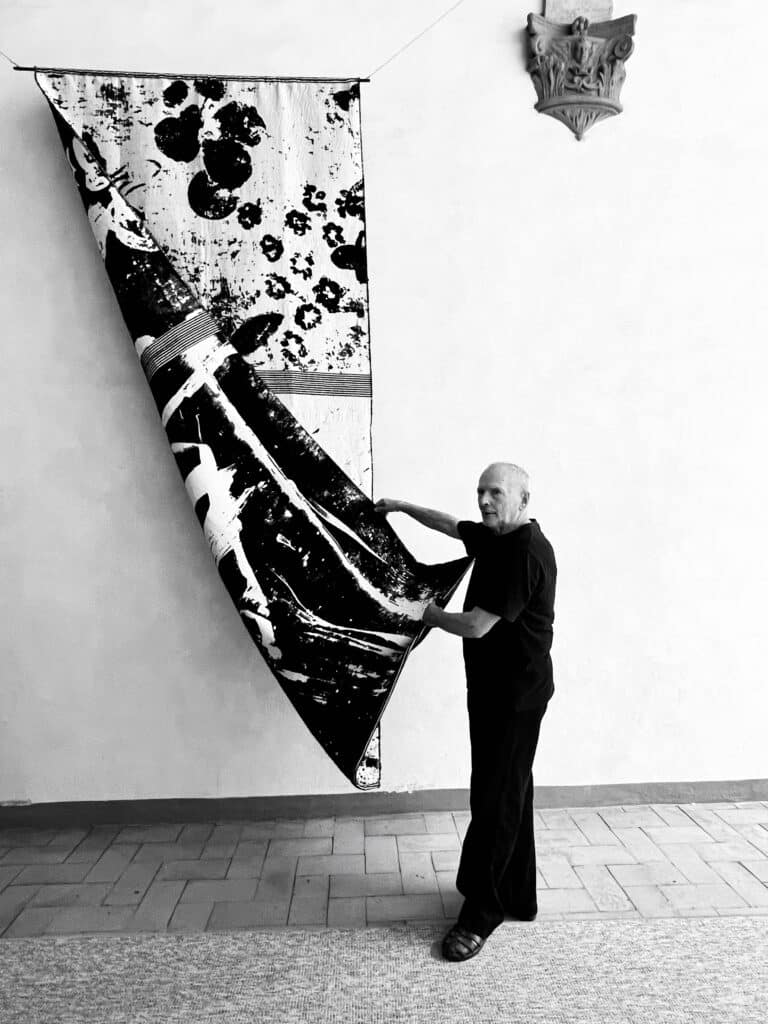
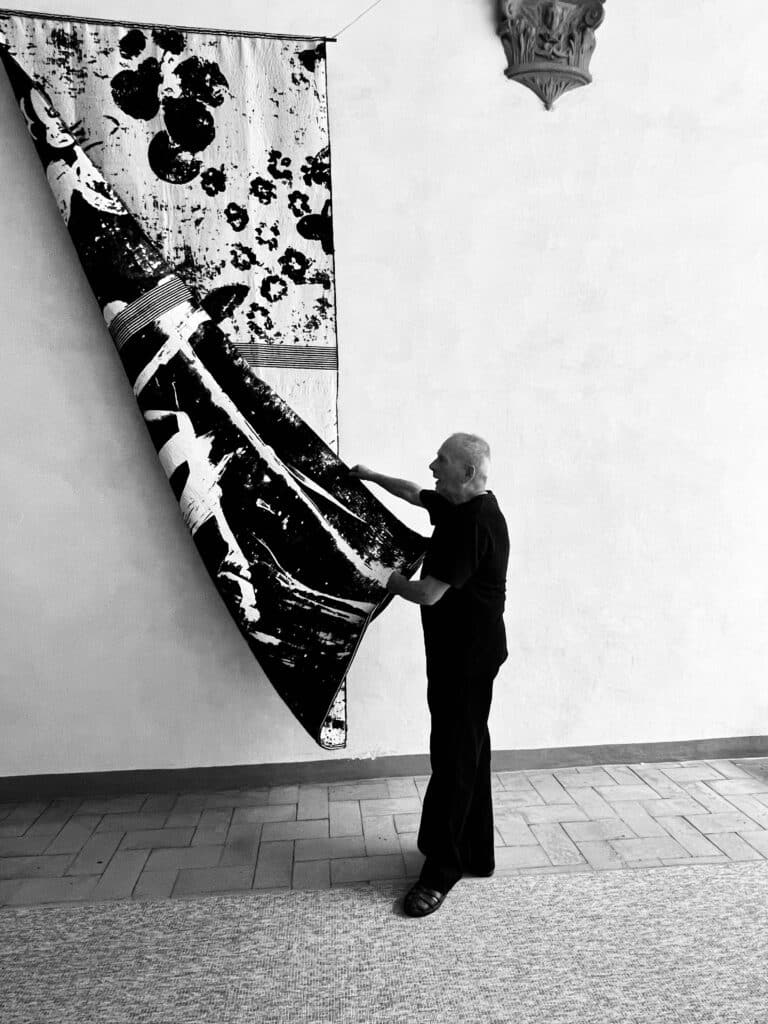
Bisogna avvicinarsi lentamente. Da lontano appaiono come apparati, paramenti, frammenti sottratti a una parete consacrata. Da vicino rivelano invece la loro natura costruita. Stoffe, disegni, lembi di altre opere, incisioni, pigmenti, ori, terre. Tracce differenti vengono tagliate, accostate, sovrapposte, intarsiate. Nulla è esattamente ciò che sembra e quasi nulla appartiene più interamente al luogo dal quale proviene.
È qui che comincia l’ornato mistico di Iemmi.
L’ornamento, prima di diventare decorazione, è stato linguaggio. Per secoli ha indicato gerarchie, protetto soglie, accompagnato il sacro, nascosto e insieme rivelato. Una foglia, una geometria, una ripetizione, un intreccio potevano contenere una cosmologia. Le pareti delle chiese, i tessuti liturgici, le miniature, i reliquiari e le architetture erano superfici da leggere prima ancora che da contemplare.
Iemmi sembra tornare in quel punto remoto, quando immagine e materia non erano ancora state separate.
Nelle sue tele convivono epoche che non potrebbero incontrarsi altrove. Il disegno e il tessuto, la pittura e l’intarsio, la superficie consumata e quella preziosa. Frammenti che portano con sé provenienze differenti vengono costretti a una nuova prossimità. Il passato non è citato. Viene sezionato, ricomposto, talvolta quasi profanato affinché possa nuovamente parlare.
Anche il sacro, allora, cambia natura.
Non è necessariamente ciò che viene rappresentato. È ciò che rimane nascosto tra le cose.
È nell’oro che affiora e subito scompare. Nella simmetria interrotta. Nel frammento di un’immagine che crediamo di riconoscere senza riuscire a ricostruirla. Nel rapporto antico tra la povertà della terra e la ricchezza dell’ornamento. Materie umili e materie nobili abitano la stessa superficie come nelle grandi architetture religiose, dove pietra, legno, calce, ferro, seta e oro potevano concorrere alla costruzione di un unico spazio simbolico.
Per questo davanti alle opere di Iemmi si avverte qualcosa di familiare e insieme indecifrabile.
Come entrando in una chiesa molto antica senza conoscerne più la liturgia.
Sappiamo che quei segni significano qualcosa. Riconosciamo una grammatica, ma ne abbiamo perduto parte del vocabolario. E proprio questa distanza rende l’immagine potente. Lo spettatore è costretto a colmare ciò che manca, a cercare corrispondenze, a interrogare la superficie.
La tecnica dell’intarsio diventa allora qualcosa di più di un procedimento.
È un modo di pensare il tempo.
Ogni tela contiene altre tele, altri disegni, altre immagini. Ogni frammento porta la memoria della propria origine e contemporaneamente la perde entrando nell’opera successiva. È una piccola archeologia costruita al contrario: non si scava per riportare alla luce ciò che è stato, ma si utilizzano i resti per edificare qualcosa che prima non esisteva.
Trama e ordito.
Due parole appartenenti al tessuto che finiscono per descrivere un universo più grande. La trama è ciò che vediamo, l’intreccio delle immagini, dei materiali, dei simboli. L’ordito è ciò che non vediamo ma tiene tutto insieme: la storia, la memoria religiosa, la cultura dell’ornamento, il gesto dell’artista.
Forse è per questo che queste opere sembrano possedere una loro silenziosa gravità.
Non chiedono di essere decifrate completamente.
Del resto anche le immagini che per secoli hanno abitato monasteri, absidi e cappelle non erano state create soltanto per essere comprese. Dovevano essere attraversate dallo sguardo, ripetute, ricordate. Dovevano costruire una relazione tra ciò che era presente e ciò che non poteva esserlo.
Fabio Iemmi prende frammenti appartenenti a tempi, immagini e materie differenti e li costringe a convivere.
Poi lascia che sia il nostro sguardo a cercare, tra trama e ordito, ciò che li tiene misteriosamente insieme.
The Weft and Warp of Fabio Iemmi
There are images that belong to history, and images that seem to belong to a time before history. Not because they are older, but because they continue to preserve something we no longer know how to name.
The canvases of Fabio Iemmi seem to come from this territory.
They ask to be approached slowly. From a distance, they appear as ceremonial objects, vestments, fragments removed from a consecrated wall. Up close, however, they reveal their constructed nature. Fabrics, drawings, remnants of other works, incisions, pigments, golds, earths. Different traces are cut, brought together, layered and inlaid. Nothing is exactly what it seems, and almost nothing still belongs entirely to the place from which it came.
It is here that Iemmi’s mystical ornament begins.
Before ornament became decoration, it was language. For centuries it established hierarchies, guarded thresholds, accompanied the sacred, concealed and revealed at the same time. A leaf, a geometry, a repetition, an interlacing could contain an entire cosmology. Church walls, liturgical fabrics, illuminated manuscripts, reliquaries and architecture were surfaces to be read even before they were contemplated.
Iemmi seems to return to that distant point in time, when image and matter had not yet been separated.
Within his canvases, periods coexist that could hardly meet anywhere else. Drawing and fabric, painting and inlay, worn surfaces and precious ones. Fragments carrying different origins are forced into a new proximity. The past is not merely quoted. It is dissected, reconstructed, at times almost profaned, so that it may speak again.
The sacred, too, changes its nature.
It is not necessarily what is represented. It is what remains hidden between things.
It lies in the gold that emerges only to disappear again. In interrupted symmetry. In the fragment of an image we believe we recognise but cannot fully reconstruct. In the ancient relationship between the poverty of earth and the richness of ornament. Humble and precious materials inhabit the same surface, as they once did in great religious architecture, where stone, wood, lime, iron, silk and gold could all contribute to the construction of a single symbolic space.
This is why, before Iemmi’s works, one experiences something at once familiar and indecipherable.
Like entering a very ancient church whose liturgy we no longer know.
We know that those signs mean something. We recognise a grammar, but we have lost part of its vocabulary. And it is precisely this distance that gives the image its power. The viewer is compelled to fill what is missing, to search for correspondences, to question the surface.
The technique of inlay thus becomes something more than a process.
It becomes a way of thinking about time.
Every canvas contains other canvases, other drawings, other images. Each fragment carries the memory of its origin and, at the same time, loses it as it enters the next work. It is a small archaeology constructed in reverse: rather than excavating to bring back to light what once existed, remnants are used to build something that did not exist before.
Weft and warp.
Two words belonging to the language of textiles that ultimately describe a much larger universe. The weft is what we see: the interweaving of images, materials and symbols. The warp is what we do not see, yet what holds everything together: history, religious memory, the culture of ornament, the artist’s gesture.
Perhaps this is why these works seem to possess a silent gravity of their own.
They do not ask to be completely deciphered.
After all, the images that inhabited monasteries, apses and chapels for centuries were not created merely to be understood. They were meant to be traversed by the gaze, repeated, remembered. They were meant to establish a relationship between what was present and what could not be present.
Fabio Iemmi takes fragments belonging to different times, images and materials and compels them to coexist.
Then he leaves it to our gaze to search, between weft and warp, for whatever mysteriously holds them together.
GUADI — Mostra di Fabio Iemmi
19–27 settembre
Palazzo Zambeccari
Piazza de’ Calderini, Bologna
Nell’ambito di BOLD&Flow — Bologna Live Design